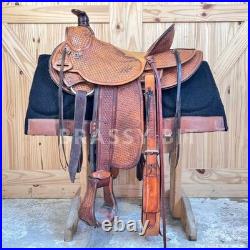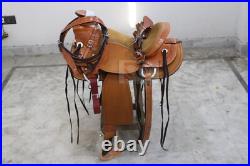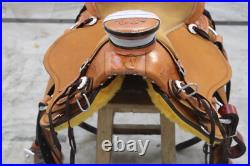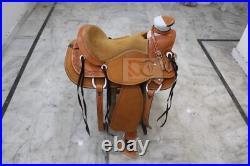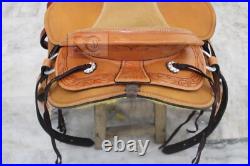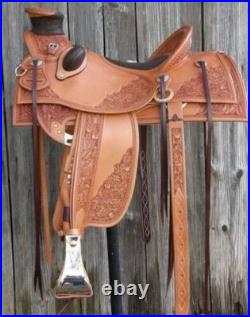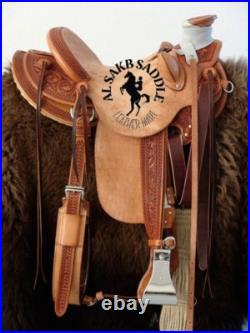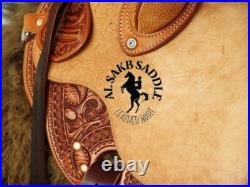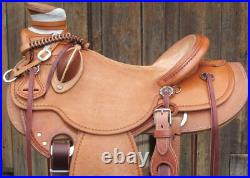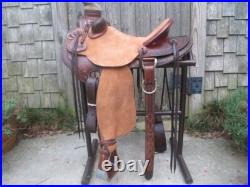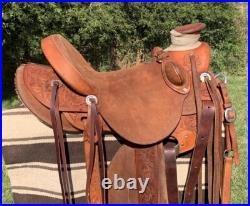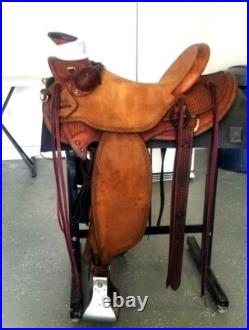

Western Saddle Roping Ranch Equestrian Trail Horse Wade Tree A Fork Tack. This wade tree roping saddle features a hand carved tooling that is designed on thick cowhide leather. The seat offers the perfect grip while roping cattle. The classic design of the saddle features shiny silver conchs and numerous ties for accessory attachments. The wide pie horn is reinforced with a mule hide wrapping for extra stability and durability. The underside of the saddle is well-padded with fleece for maximum horse comfort. 100% Heavy Duty Cowhide Leather Hand Carved Tooling Seat Mule Hide Wrapped Horn Numerous Accessory Ties Shiny Silver Sun Conchs Adjustable Stirrups Adjustable Blevins Buckles Well-Padded Fleece Underside Wade Tree Design Wood Base Tree Wrapped In Fiberglass. Seat: 10″ to 18″ inches Seat. Gullet: 6″ & 7″ FQHB. Skirt: 25 – 29. Horn: 3″ x 5″ wide. Stirrups: 28 – 38. In addition, due to monitor and lighting differences, actual color may vary slightly from what appears online. Western youth saddle, Saddles for Kids, Kids Saddle, Tooled Western Saddle, Western Saddles for Sale, Western Leather Saddle, Kids Western Saddle, Floral tooled western saddle, Kids Horse Saddle, Western Horse Saddle, Horse Wade Saddle, Western Wade Saddle, Western Roping Saddle, Western Roper Saddle, Sazaar Tack, Western Tack Set, Equestrian Tack Set, saddlery shop. A western saddle is a type of horseback riding saddle that is traditionally used for western-style riding, which includes activities like rodeo, cattle herding, and trail riding. It is designed for comfort and security during long rides, with features like a higher cantle (the back portion of the saddle), a horn (a prominent knob on the front for tying reins or roping), and wide stirrups. These features help distribute the rider’s weight evenly and provide support for activities such as roping and working with livestock. Size & Shape: The seat is typically larger and more padded than those found on English saddles, providing comfort during long rides. It’s often deep, offering more security for the rider. Materials: Commonly made from leather, sometimes with a suede covering for extra grip. A distinguishing feature of western saddles, the horn is located at the front of the saddle, above the pommel (front portion of the saddle). It’s used for securing roping tools and can also help the rider maintain balance while riding. The cantle is the back portion of the saddle and is typically higher in a western saddle. This feature provides extra support for the rider’s back and helps prevent the rider from sliding off during bumpy rides or while performing tasks like roping. The pommel is the front part of the saddle, where the horn is located. It can sometimes have a swell, or a raised area around the pommel, which adds extra comfort and stability. Wide & Flat: Western stirrups are typically larger and flatter than English stirrups. The wider base helps distribute the rider’s weight evenly, which is important for comfort during long hours of riding. Leather or Metal: The stirrup leathers are often longer and can be adjusted easily for different leg lengths. The rigging refers to the system of straps and buckles that secure the saddle to the horse. Western saddles usually have a “full rigging” or “3/4 rigging, ” depending on how the saddle is attached. Full rigging provides more stability, which is important for activities like roping. The skirts are large, flat leather pieces that hang down on either side of the saddle to protect the horse’s back from friction. These are wider than in English saddles to help distribute the weight more evenly. Cinches: The cinch is the strap that secures the saddle to the horse’s belly. It’s typically made of nylon or leather and runs underneath the horse. For western saddles, two cinches are often used, one on each side, to ensure a secure fit. Girth: The girth is a similar concept but is more common in English saddles. Stirrup Leathers & Buckles. The stirrup leathers are adjustable, allowing the rider to choose the length that’s most comfortable. These are usually made from thick leather and have buckles for easy adjustment. The tree is the internal frame of the saddle. It is designed to support the rider’s weight while ensuring the saddle is secure and comfortable for both the horse and rider. There are different types of saddle trees for different types of horses quarter horse, thoroughbred, etc. Types of Western Saddles. Roping Saddles: Built for roping, these saddles are heavy-duty with a sturdy horn and secure rigging. The seat is designed to keep the rider comfortable while working cattle. Barrel Racing Saddles: These are lighter and more streamlined than roping saddles, designed for speed and agility during barrel racing. The horn is smaller, and the seat offers more freedom of movement. Trail Saddles: Designed for long-distance comfort, trail saddles have extra padding and features like comfortable seat designs and larger skirts for weight distribution. Reining & Cutting Saddles: Used in competitions where a rider needs to make precise and fast movements, these saddles are designed to keep the rider securely in place while allowing freedom of movement for the horse. Advantages of a Western Saddle. Comfort for Long Rides: The larger seat, deeper cantle, and extra padding make it more comfortable for long hours in the saddle. Security: The horn and high cantle help the rider stay secure, particularly during activities like roping or working cattle. Durability: Western saddles are built to withstand rugged work and harsh conditions, especially in ranching or rodeo environments. So, please check your custom charges before placing order.